Climate Change Is Rewriting Hospitality’s Map and Calendar
There is hardly a conversation about the future of hospitality today that does not eventually turn to artificial intelligence.
How will AI change distribution? Revenue management? Staffing? Personalisation? The guest journey? These are important questions, and the industry is right to keep asking them.
But while we watch one transformation unfold on our screens, another is taking place outside our windows.
Climate change is beginning to rewrite the map and calendar of hospitality.
As I write this in August 2026, another intense heatwave is sweeping across Europe. Temperatures have exceeded 40°C in several countries. Italy has placed all 27 of its monitored major cities under the highest heat alert. Austria has recorded its highest temperature ever.
France's case is particularly striking. After its hottest spring since national measurements began in 1900 and its hottest June on record, July 2026 became the hottest month ever recorded in the country, with an average temperature of 24.9°C (surpassing even August 2003).
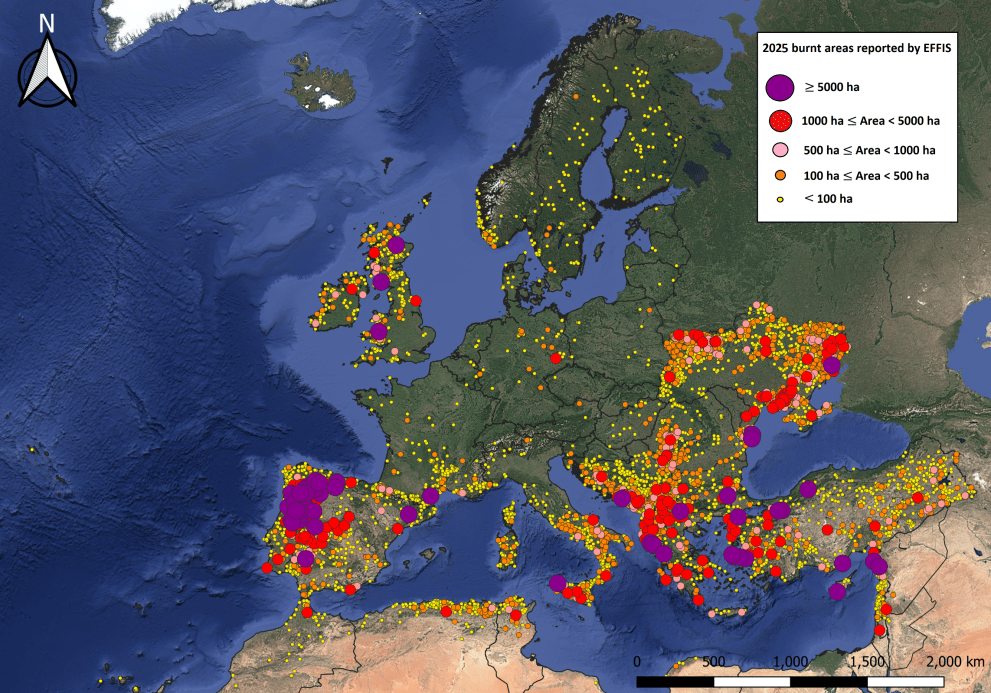
Wildfires, drought and extreme heat have disrupted everyday life and travel across parts of Europe. What once felt exceptional is becoming recurrent.
For decades, the European summer holiday followed a remarkably resilient formula for a majority of people: take your holidays in July or August, head south, look for the sun. But what happens when the sun is no longer something travellers need to seek, but something they increasingly need to escape?
The implications extend far beyond Europe. A changing climate progressively influences where we travel, when we travel, how far we travel, how we get there, what hotels we build, how we operate them, what guests expect once they arrive.
For an industry accustomed to thinking about climate change largely through the lens of sustainability and carbon reduction, a second, less comfortable question is becoming just as important: how will tourism and hospitality adapt to the climate that is already changing around it?
The destination
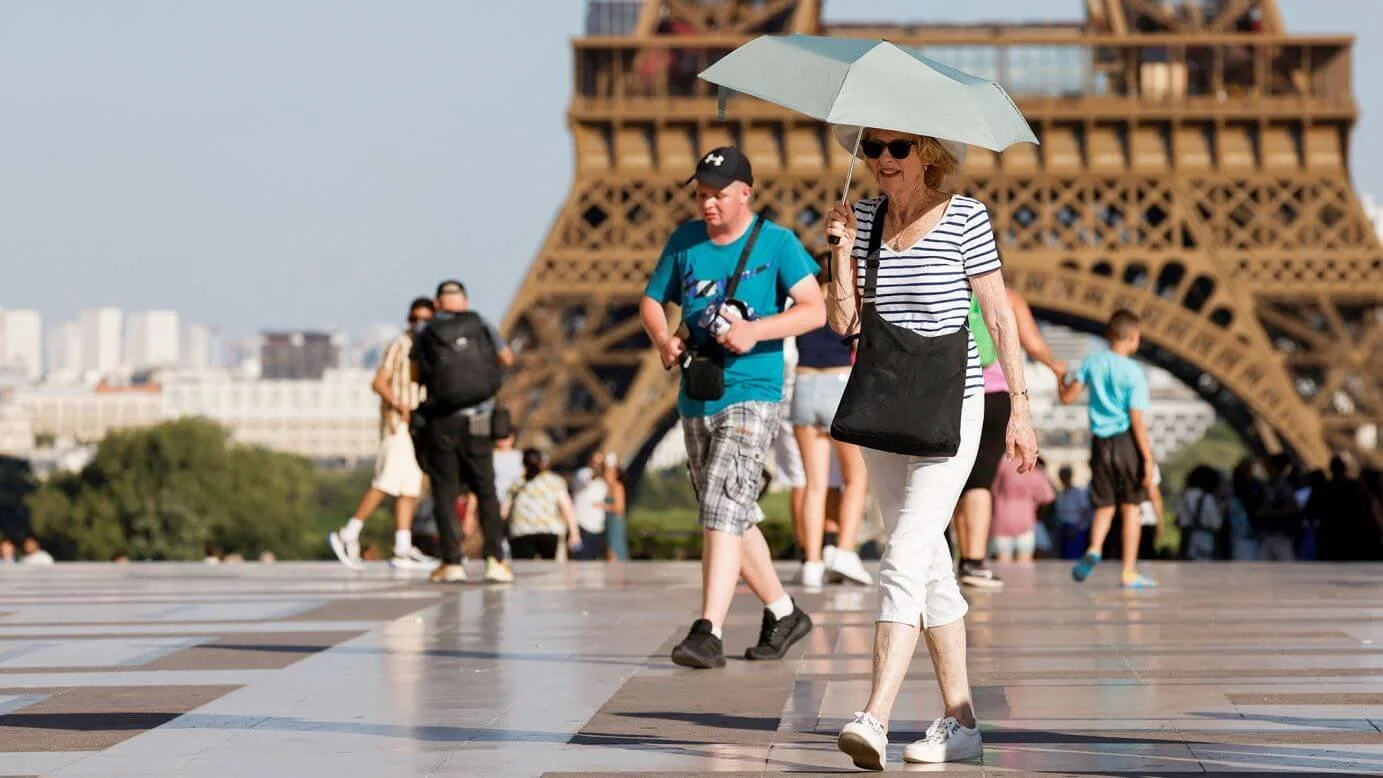
Sunshine has long been one of tourism's most reliable currencies. The Mediterranean built much of its summer proposition around something northern European travellers could not reliably find at home: warmth. But there is a point at which warmth stops being an attraction. A beach holiday at 30°C is one thing. A destination experiencing repeated days above 40°C, with temperatures that barely drop at night, is something else entirely.
The OECD's Tourism Trends and Policies 2026 report, published in July this year , devotes an entire chapter to tourism's adaptation to extreme weather. Its conclusion: heatwaves, wildfires, floods and storms are no longer simply disrupting individual holidays, they are beginning to alter travel patterns across regions and seasons.
This is giving rise to what has been called the "coolcation": travellers deliberately choosing cooler destinations for their summer holidays. The Financial Times has reported growing demand for Nordic destinations (Norway, Sweden, Finland, Denmark, Iceland) as travellers look for alternatives to increasingly hot southern European summers. Booking platforms and tour operators are seeing more interest in Nordic summer travel, even as the Mediterranean continues, for now, to dominate overall bookings.
Climate is beginning to alter one of the fundamental assumptions behind destination choice. For years, the question was: where can I find the sun? Increasingly, for some travellers, it is becoming: where can I escape the heat?
That change could benefit destinations historically disadvantaged by their cooler climate. Brittany in France is an interesting example. Its growing luxury hotel market cannot be attributed to climate change alone (there are many factors at play) but the direction of travel is worth noting. According to an INSEE analysis of Brittany's hotel sector, the number of four and five-star rooms in the region grew by 13% between 2017 and 2022, even as the overall hotel room count declined slightly; in some areas, such as Brest, the drop in one and two-star capacity was far steeper. Nights in four and five-star hotels grew at the same pace, reaching nearly a quarter of all hotel stays in the region by 2022, and the trend has continued since, with upmarket properties again driving growth in 2025.
New upscale projects are appearing along the Breton coast, including Saint-Malo, while Dinard and Belle-Île-en-Mer continue moving further into the premium segment. One hotel developer quoted in French press coverage of the trend made an observation worth sitting with: guests are increasingly looking less for guaranteed sunshine and more for authenticity, sensory experience and genuine escape.
The same questions are surfacing elsewhere. Scandinavia's hotel pipeline has grown busier and more upscale in recent years, and not only in the capitals: Villa Nord, a new boutique hotel, is set to open in Trondheim in September 2026; Rox Resort, a 156-room luxury spa hotel, recently opened on the coast at Køge, south of Copenhagen; and The Dock Hotel has opened by the marina in Södertälje, Sweden. Climate change is not necessarily why these hotels are being built. But if travellers increasingly seek cooler summer destinations, the economics of coastal and northern locations become more attractive.
Could Brittany compete differently with the Mediterranean? Could Scotland, Scandinavia, Canada or higher-altitude destinations become more attractive in July and August? Could cool nights, once taken for granted, become part of a hotel's luxury proposition?
The map
There is evidence this redistribution could become significant. Research by the European Commission's Joint Research Centre modelled tourism demand across 269 European regions over a 20-year period and projected how that demand could evolve under different warming scenarios through 2100. The results point towards a genuine geographical redistribution: under a 4°C warming scenario, tourism demand in Greece's Ionian Islands could decline by roughly 9%, while West Wales could gain almost 16%.
The exact figures shouldn't be read as forecasts of what will inevitably happen — traveller behaviour is influenced by far more than temperature. But the direction is difficult to ignore: southern coastal regions become relatively less attractive during the hottest periods, while some northern coastal regions gain. The OECD reaches a similar conclusion, arguing that changing seasons, extreme weather and rising sea levels are increasingly capable of reshaping the geography of tourism demand and global travel flows.
None of this means tourists will abandon the Mediterranean, Bali, Sri Lanka or the Indian Ocean. Tourism doesn't work that way. Culture, family habit, school calendars, price, accessibility, familiarity, gastronomy and simple emotional attachment to place remain enormously powerful. But competitive advantage is relative. A destination does not have to become uninhabitable to lose some of its appeal, it only has to become less comfortable at a particular time of year than the alternatives. The reverse is equally true: places that historically struggled to guarantee warm summer weather may discover they no longer need to.
This raises a genuine question for hotel investors. When assessing a location today, should we still be looking primarily at the tourism flows of the last ten or twenty years or also at where those flows might be twenty years from now? Hotels are long-term assets. A property conceived today may still be operating in 2050 or 2060. Is climate trajectory sufficiently reflected in today's feasibility studies, valuations and development decisions?
The calendar
Perhaps the greater transformation will occur not in where people travel, but when. July and August dominate European tourism partly because of school holidays and deeply entrenched social habit, but they also became peak months because they offered the best odds of good weather. The concentration is extraordinary: according to the OECD, around 40% of all tourist nights across OECD countries fall within just three months of the year. For inbound tourism, the figure exceeds 50% in several countries, including Greece, Norway and Sweden. Entire hospitality economies (pricing, staffing, airline capacity, restaurant operations, investor projections) are organised around this calendar.
But what if July and August no longer consistently offer the most desirable conditions? The European Commission's modelling suggests climate change could shift tourism demand away from the hottest summer months towards spring and autumn. Under its most severe warming scenario, July sees the sharpest decline in European tourism demand, while April records the largest gain.
Could May and June, or September and October, gradually become Europe's premium travel months? For Mediterranean destinations, this need not be bad news , it could be an opportunity. A longer season could improve annual hotel utilisation, spread employment across more of the year, ease pressure on infrastructure during a handful of exceptionally busy weeks, and let destinations operate more sustainably. It would, however, require hospitality businesses to rethink staffing, pricing, maintenance schedules and the very concept of "high season." Perhaps August remains peak in Brittany or Scandinavia while September becomes increasingly important in Provence, Tuscany or Greece.
Climate change may not eliminate high season. It may simply move it.
The booking
There is another dimension to this that has little to do with where hotels are built or when guests travel, and everything to do with how a room gets sold in the first place.
Imagine booking a Mediterranean resort nine months ahead for August 2035. Increasingly, the guest doesn't know whether that week will bring 31°C and beautiful weather, or 44°C, wildfire smoke and travel restrictions. That uncertainty is already showing up in booking behaviour. Cancel For Any Reason coverage, once a niche add-on, is becoming an increasing relevant consideration for higher-value trips, while heatwaves expose an important gap in conventional travel insurance. Standard travel insurance still typically excludes cancellation for heat alone, unless a destination is formally declared a disaster zone, which leaves a gap most travellers don't discover until they need it. Meanwhile the disruption is no longer hypothetical: a single 24-hour spell of extreme heat in late June 2026 delayed or cancelled several thousand flights across Europe, and France's national rail operator has cancelled intercity services after heat damaged overhead lines. Online travel agencies may increasingly need to treat flexible cancellation less as a premium feature and more as a baseline expectation.
This creates genuine commercial questions for hoteliers, not just travellers. Should properties in climate-exposed destinations build more flexible cancellation terms around extreme-weather alerts, rather than leaving guests to fight it out with their insurer? Could revenue management eventually weight extreme-heat forecasts alongside the demand indicators it already tracks? Could a hotel in Brittany raises its prices during a Mediterranean heatwave, the way ski resorts already reprice around snow conditions? And could resorts in hot destinations learn to market indoor and shaded experiences more assertively when a heat alert is forecast, rather than promoting roof tops and terraces?
Climate volatility may end up doing more than reshaping where hotels are built. It may make flexibility itself part of the luxury proposition.
The journey
It's easy to overlook the part of hospitality that happens before check-in: getting there. Extreme weather can affect rail infrastructure and electricity networks, close roads and railway lines through wildfire, reduce river levels, and disrupt airport and aircraft operations. During the current heatwave, exceptionally low river levels have already strained transport and energy infrastructure across central Europe, with drought affecting Danube flows and forcing Hungary's Paks nuclear plant to sharply reduce output, while extreme heat and wildfires have repeatedly disrupted road and rail movement across the continent.
For the traveller, this adds a new variable to destination choice. The question is no longer simply “will the weather be good when I arrive?” It may increasingly be: “can I get there reliably, can I move around once I'm there, and what happens if conditions deteriorate during my stay?” In July, French authorities ordered the evacuation of the entire Cap Ferret peninsula as wildfires spread along the Atlantic coast, while a separate fire near Biscarrosse forced more than 23,000 people to leave, including holidaymakers staying at campsites.
This matters most for resorts dependent on a single airport, a single road, a ferry connection or fragile local infrastructure. Accessibility has always been part of location analysis for hotel developers. Should its climate resilience now be part of that analysis too?
The hotel
Are we still building hotels for yesterday's climate?
Hotels are still being conceived today on assumptions about climate, seasonality, guest behaviour and infrastructure that may look very different across the lifetime of the asset. Shade, orientation, insulation, vegetation, water availability, cooling capacity, renewable energy, backup power and indoor-outdoor design may all become more central to guest experience and asset resilience. Swimming pools and landscaping raise questions about water. More intensive cooling raises questions about energy. Greater reliance on air-conditioning raises questions about backup power. Outdoor restaurants, terraces and golf courses may need rethinking if they become uncomfortable during a growing share of the traditional high season.
The OECD's recommendations are increasingly explicit: embed climate-risk assessment, early-warning systems and crisis response into tourism planning, and invest in infrastructure capable of withstanding more frequent extreme weather. That thinking should arguably begin much earlier, at the development stage. Should a hotel feasibility study now include projections of future temperature, drought, wildfire and flood risk? Should lenders and investors weigh climate exposure over an asset's full economic life? Should hotel brand standards, hotel managements and franchise agreements address the capital required to adapt a property to a changing climate?
Climate resilience is becoming an investment consideration, not merely an ESG one.
The experience
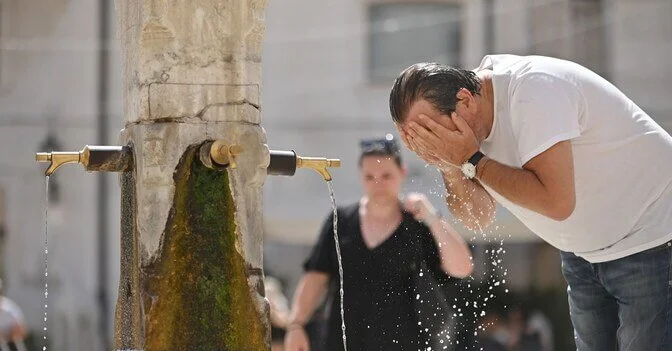
Hotels may also need to rethink the rhythm of the day. When temperatures exceed 40°C, sending guests to visit a medieval town, cycle through vineyards or walk archaeological ruins at two in the afternoon becomes unrealistic, and potentially unsafe. We are already seeing destinations adapt: during the current heatwave, Rome has expanded evening access to tourist sites and introduced cooling measures for residents and visitors alike.
Hospitality may increasingly have to adapt around the climate rather than expecting guests to adapt to traditional schedules. Excursions might begin at 7am rather than 10am. Outdoor activities could shift toward sunrise and sunset, while the middle of the day becomes a period for swimming, spa treatments, indoor culture, lunch, or simply rest. Restaurants and attractions could stay open later; housekeeping and outdoor staff schedules may need to shift with them. Pools, shaded areas and wellness spaces become more central to the experience, not peripheral to it.
The danger is to continue designing the guest journey around a day that no longer exist.
The table
That changing rhythm extends to what we consume. Extreme heat affects appetite, hydration and the occasions around which people eat and drink. Hotels and restaurants may find guests seeking lighter dishes, fresher ingredients, more fruit, cold preparations and increasingly sophisticated non-alcoholic drinks.
The interesting question is: does a hotter climate change what hospitality serves? Perhaps breakfast starts earlier, so guests can begin their day before the heat sets in. Perhaps lunch grows lighter and the traditional afternoon terrace loses relevance while late-evening dining gains it. Perhaps chilled wines (including some red wines) become necessary through the hottest months, and menus themselves grow seasonal not just to ingredients, but to temperature.
Adapting to heat doesn’t mean chasing a fixed list of “cooling” ingredients regardless of origin or season. A tomato flown in during a month it doesn’t grow locally, or a strawberry shipped from wherever it happens to be summer, solves nothing. It just trades one form of unreasonableness for another.
Hospitality has always adapted food to culture and place. Increasingly, it may have to adapt it to climate too.
A different kind of summer
None of this means the end of Mediterranean tourism. People will keep travelling to Provence, Tuscany, Mallorca, Greece, Bali, Sri Lanka and the Indian Ocean. Sunshine, landscape, culture, gastronomy and the sea will not suddenly lose their pull. But the habits surrounding them may change. People may stop going to the same places, at the same time, in the same way, expecting the same experience. September in Provence may become more desirable than August. A family that once spent three weeks every July at the same Mediterranean campsite may choose a different region, or stay mobile enough to change plans when fire or extreme heat threatens. A traveller once seeking guaranteed sunshine may start seeking guaranteed cool nights instead. A mountain resort may compete directly with one on the beach. And places once considered too cool for a traditional summer holiday may discover their climate has become part of their luxury proposition.
There is one more shift worth watching. As climate change becomes something travellers experience personally rather than simply read about, will more of them start questioning the logic of flying thousands of kilometres for a summer holiday when compelling alternatives exist closer to home? Surveys consistently suggest travellers want to travel more sustainably; actual booking behaviour remains more complicated, and price, convenience and aspiration still matter enormously. But even a modest shift toward closer-to-home travel could meaningfully strengthen domestic and regional destinations.
For the industry, all of this calls for a change in perspective. Climate change shouldn't only be considered through the lens of carbon emissions and sustainability commitments, important as those are. It should also be considered through the lens of consumer behaviour, destination strategy, seasonality, hotel development, design, operations, infrastructure, risk and investment.
The industry must ask itself whether the assumptions on which it develops, operates and sells destinations or hotels are still the right ones.